
DRINKING GUIDE
Cask strength vs. standard strength: what changes in the glass?
What cask strength means, why stronger does not automatically mean better, and how to choose a bottling that suits the way you drink.
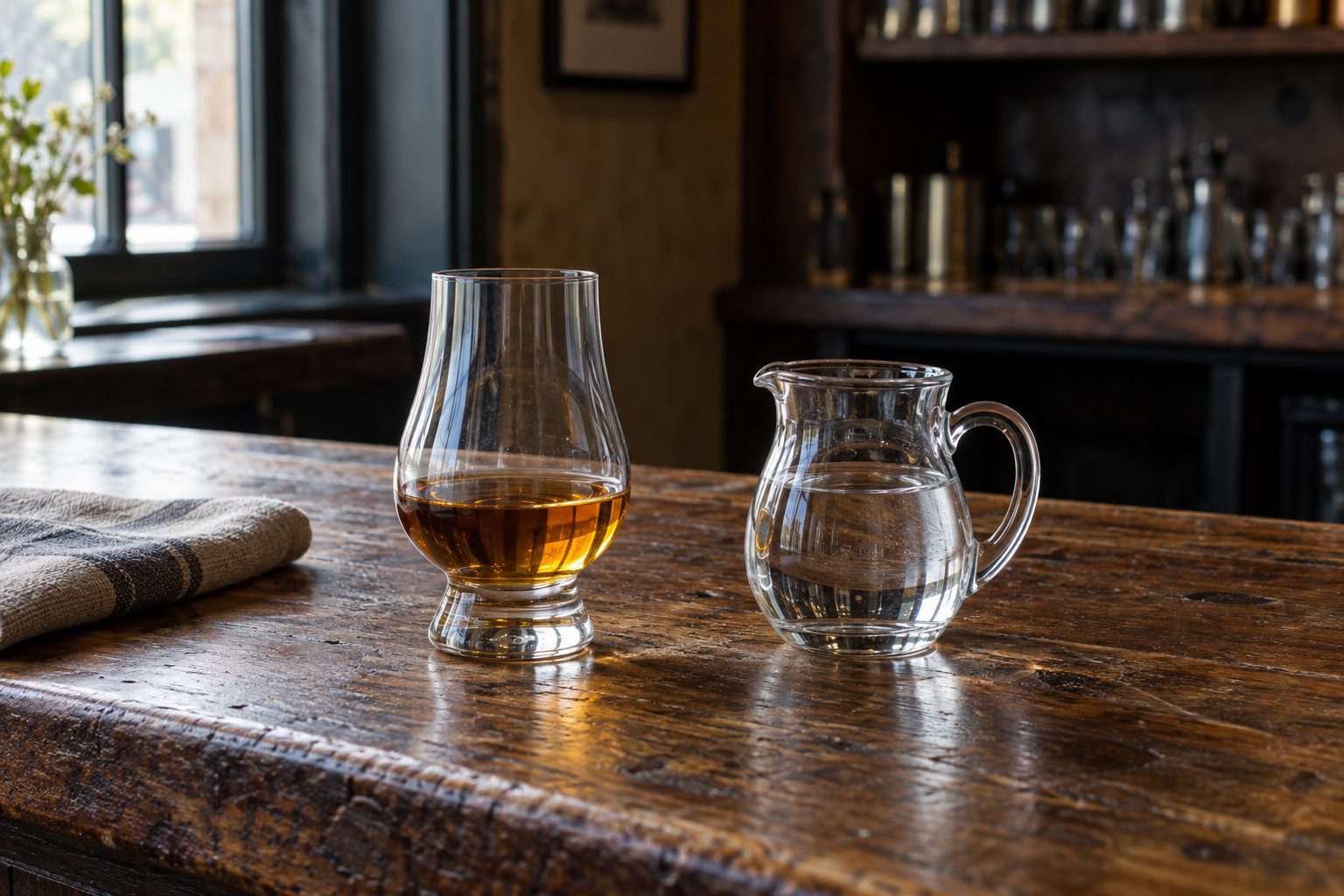
What the label tells you
A standard bottling is commonly reduced with water before bottling to achieve a consistent alcohol strength. Cask-strength whisky is presented at its strength from the cask. That number can vary: read the ABV on the bottle you are considering instead of assigning one percentage to the whole category. The Glenlivet's cask-strength explainer describes this distinction.
Use that information to understand the starting point in your glass. It does not answer whether you will like the fruit, oak or spice, whether the finish will appeal to you, or whether this is the right bottle for the occasion. Those are separate questions for a tasting note.
Choose for the way you drink
Consider standard strength if you want a familiar starting point. You can pour it as presented and decide whether you want water or ice. There is no obligation to move to a stronger edition as your interest grows. A bottle you enjoy regularly is a better choice than a specification bought to impress somebody else.
Consider cask strength if experimenting is part of the appeal. You can explore how the drink changes with dilution and find your own preferred balance. That makes it useful for a curious drinker, but also adds a decision. If you want to settle into a glass without adjusting anything, that flexibility may not be your priority.
Make water an option, not a test
The Glenlivet recommends adding water gradually and tasting as you go. The practical lesson is to make a small adjustment, pause, and decide whether you prefer the result. You do not need to prove that you can drink it neat. Producer guidance on serving cask strength.
For your own notes, keep the questions simple: can you distinguish the flavours you enjoy, does the texture appeal, and would you choose this balance again? Record what you added in ordinary terms. You are finding a preference, not trying to hit a universal ideal strength.
An example from the review library
Redbreast 12 and Redbreast 12 Cask Strength have separate pages in our library. The standard review describes creaminess, sherried fruit and a gentle body. Read the cask-strength review as an assessment of its own bottling, rather than assuming that a change in ABV is the only relevant difference.
Redbreast describes the cask-strength expression as using bourbon-seasoned barrels and Oloroso sherry-seasoned butts. This is a producer description of that expression, not a claim that our editors have conducted a controlled dilution experiment. Redbreast's product information.
Before choosing a bottle
Read the exact expression name, the bottle's ABV and the review together. Then decide whether you want an easy familiar pour or the freedom to adjust it. Stronger is a useful piece of information; it is not a substitute for knowing what you enjoy.
Continue with Redbreast 12 vs. Green Spot if flavour character is your main question, or browse the review library for a specific bottle.
Sources checked on 9 September 2026. This is an editorial guide, not a new scored tasting. Our About page explains the pseudonymous editorial seats.